Yamaguchi University, Japan
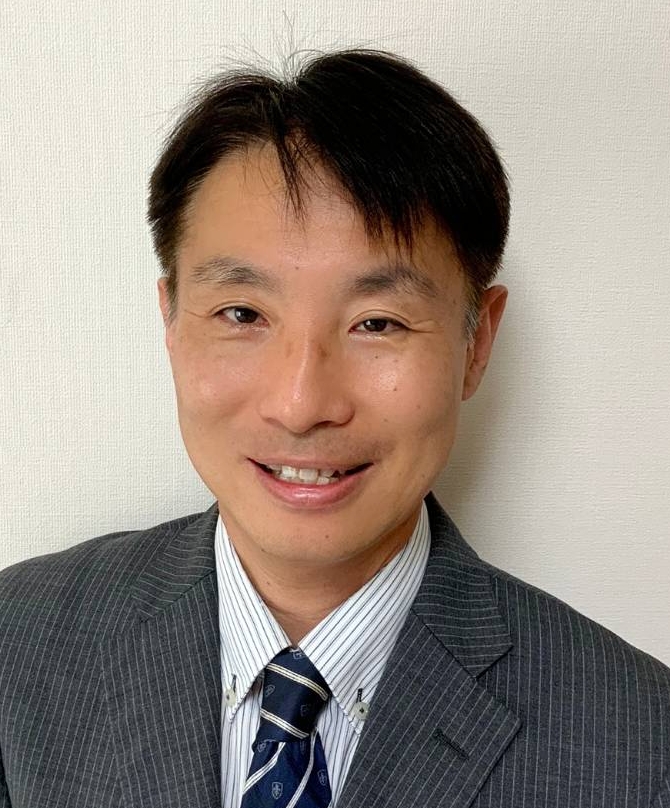
Special Title:
From Infection to Digital Immunity: Self-Healing Multi-Agent Architectures for Autonomous IoT Defense
Abstract:
Rapid IoT expansion exposes resource-constrained devices to automated cyber threats such as Mirai botnets, rendering traditional manual defenses obsolete. To address this challenge, we present an innovative defense framework that repurposes threat propagation mechanisms into autonomous countermeasures. This talk introduces two agent-based architectures: the Botnet Defense System (BDS) and its evolution, the Immune-Based Botnet Defense System (iBDS). BDS employs autonomous white-hat worm agents to penetrate infected devices, terminate malicious processes, and harden device security. Formally modeled with Agent-Oriented Petri Nets (PN2) and verified using NuSMV, BDS guarantees mathematically proven safety and stability. Building on this foundation, iBDS integrates biological immune principles—combining innate immunity and acquired immunity. Empirically validated on Raspberry Pi Zero and OpenWrt testbeds, the system neutralizes persistent attacks within minutes without human intervention. By bridging multi-agent systems, formal verification, and bio-inspired computing, this research establishes a resilient, autonomous cybersecurity framework for future IoT ecosystems.
Biodata: Prof. Shingo Yamaguchi is a Professor with the Graduate School of Sciences and Technology for Innovation and serves as the Dean of the Faculty of Informatics at Yamaguchi University. He received the B.E., M.E., and D.E. degrees from Yamaguchi University, Japan, in 1992, 1994, and 2002, respectively. He was a visiting scholar at the University of Illinois at Chicago, U.S., in 2007. His research interests include AI, the IoT, and cybersecurity. He holds several editorial leadership roles, including Editor-in-Chief of the International Journal of Internet of Things and Cyber-Assurance,Editor of ECTI Transactions on Computer and Information Technology,and Associate Editor of Springer Nature Computer Science. He has previously served on the Board of Governors of the IEEE Consumer Technology Society (formerly Consumer Electronics Society) and as Editor-in-Chief of IEEE Consumer Electronics Magazine. Furthermore, he has served as Executive Conference Chair for numerous international conferences, such as IEEE GCCE 2014, GCCE 2015, and ICCE 2021. He published around 300 papers in refereed journals and international conferences. He is a Senior Member of the IEEE and IEICE.
The University of Osaka, Japan

Special Title:
Understanding Urban Dynamics with AI: Challenges and Opportunities for Next-Generation Urban Intelligence
Abstract:
The rapid development of AI and urban big data is transforming the way we observe and understand urban dynamics. Understanding the complex interactions between the urban environment and human activities is crucial for the effective use of urban space, resource management, and infrastructure planning. However, a significant gap still exists between advances in AI-driven analytical methods and their application to real-world urban planning challenges. This talk explores how advanced AI methods can enhance urban intelligence through spatial modeling, human activity analysis, and behavioral data science. In addition to methodological advancements, this talk will highlight the challenges of applying advanced methods in practice and the opportunities they offer to reshape how cities may evolve under different future scenarios.
Biodata:
Dr. Chou is an Assistant Professor in the Division of Sustainable Energy and Environmental Engineering, The University of Osaka, Japan. She received her Ph.D. and M.S. degrees in Division of Global Architecture (Engineering) from The University of Osaka in 2025 and 2022, respectively. She was a visiting researcher at Thammasat University, Thailand, in 2023, and at the University of Manchester, United Kingdom, and Brandenburg University of Technology Cottbus-Senftenberg, Germany, in 2026.
Her research interests include AI-driven urban intelligence, urban spatial modeling, and behavioral data science, with a focus on understanding urban dynamics and supporting sustainable, human-centered urban planning. Her interdisciplinary research integrates computational methods and social science approaches to investigate urban structures, human activities, and their interactions.
Her honors include the EASTS Best Paper Award (2023) and the NSTC TOP Grants in Social Science (2024). She serves as a panel judge for the Asia-Pacific Sustainability Action Awards (APSAA) and as an editor for IATSS Research. She is also a member of the IEEE Consumer Technology Society (CTSoc) and the World Conference on Transport Research Society (WCTRS). Her work bridges AI and data analytics with practical urban planning challenges across spatial scales, from individual activities to urban systems.